 FURNKUBE
Commercial outdoor furniture should be selected around site exposure, guest use and operating reality—not only style. The strongest purchase decision links the product application to a written specification, an approved sample, factory testing checkpoints and shipment inspection before the container is loaded.
Define the operating conditions first
The right commercial outdoor furniture is the furniture that fits the exposure, traffic and maintenance routine of a specific zone.
A resort pool deck, an all-day restaurant terrace and a serviced-apartment balcony can all be outside, yet they ask different things of the furniture. Poolside seating may encounter sunscreen, wet swimwear and frequent repositioning. Restaurant chairs may be moved many times each day and need to fit tightly around tables. Balcony furniture may face wind, rain and limited storage. A useful brief begins with these operating facts.
Before asking for a catalog, map each zone by exposure, traffic, cleaning method, storage practice and visual role. Include target dimensions, seating count, delivery sequence and any accessibility or circulation constraints. This gives a factory team something practical to evaluate and reduces the risk that a visually attractive residential item is specified for a hard-working commercial location.
Customer requirements also become easier to manage when they are separated into non-negotiable performance requirements and design preferences. For example, stackability may be essential for a restaurant, while a particular rope color may be a preference. That distinction is useful when cost, lead time or sample feedback require a decision.
- Exposure: covered, semi-covered or fully exposed to sun and rain
- Traffic: guest frequency, chair movement and staff handling
- Maintenance: cleaning chemistry, cover use, cushion storage and repair access
- Logistics: lift size, door widths, installation preparation and container loading order
Ask suppliers to quote against a zone-by-zone brief. It is more reliable than selecting from product photos and adding requirements later.
Evaluate the material system, not one headline material
A commercial specification should review the frame, finish, weave, cushions, fasteners and table surface together.
Buyers often start with a material label such as aluminium, teak or rope. That label is only the start of the technical conversation. An aluminium lounge chair, for example, can differ materially in wall thickness, weld quality, pretreatment, powder-coat coverage, hardware and cushion construction. The same is true for timber species, rope construction and fabric selection.
For modern hospitality programs, powder-coated aluminium is frequently considered where weight, corrosion management and clean lines matter. Teak is chosen where a natural material and patina are part of the design story, but it needs an agreed expectation for color variation and care. Rope is often used as a comfort and visual layer over a structural frame; buyers should ask about UV resistance, tension, terminations and where abrasion may occur.
The important question is not which material wins in every setting. The useful question is whether the complete product system is suitable for the intended climate, handling and maintenance budget. Request a written material schedule that matches the sample rather than accepting broad marketing descriptions.
Choose products by zone and application
Commercial furniture programs perform better when dining, lounge, poolside and shade products are specified as connected systems.
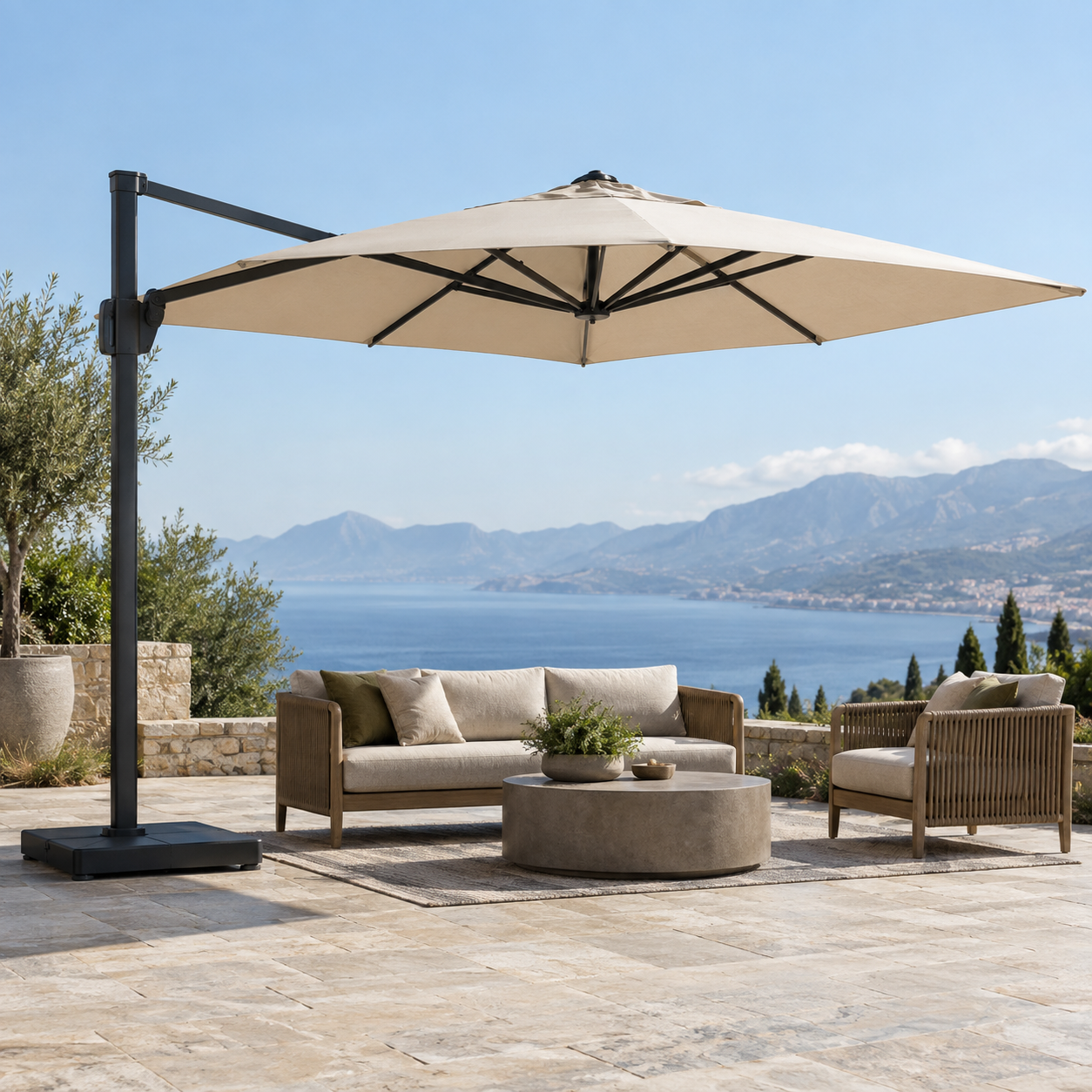
Start with the guest activity. Dining chairs need a stable sit, practical arm clearance and a table relationship that works for service. Lounge seating needs usable seat depth, cushion stability and a layout that allows staff to clean around it. Sun loungers need a clear recline mechanism, a manageable moving weight and a realistic answer for wet cushions. Shade products need to be considered with their base, wind conditions and closing procedure—not as a decorative afterthought.
In a multi-zone hotel, use a limited family of finishes and materials to keep the visual language coherent while allowing the products to do different jobs. A dark aluminium frame might appear in dining, lounge and sun-lounger pieces; a warm textile or rope can then distinguish the guest experience. This approach can also simplify spare-part planning and carton recognition during installation preparation.
Request actual product dimensions and footprint diagrams early. A line drawing or layout plan often reveals problems with chair pull-back space, service aisles and umbrella clearance before a sample is built.
Use samples and factory testing as decision gates
A sample is valuable when it is treated as a measurable approval reference for production and inspection.
A commercial sample should record more than a product name. Mark the dimensions, frame color, weave or fabric, cushion specification, table finish, hardware and packing assumptions. Where finishes are sensitive, retain a signed color or material swatch. Photos are useful context, but they do not replace a physical reference for texture, sheen or tone.
During sample review, test the things guests and staff will actually do: move the chair, sit at the table, operate a recline mechanism, remove a cushion, open shade, fit components together and assess cleanability. If the project requires an unusual use case, describe it in writing. This is where factory testing becomes practical rather than theatrical.
For production, agree the inspection points that reflect the approved sample. Common checks include frame and weld review, finish consistency, weave tension, upholstery seams, assembly, critical dimensions, accessory count and carton condition. The exact plan should be proportionate to the product and order, but the standard should remain visible to both buyer and factory.
- Sample approval sheet with product code, materials and dimensions
- Material and finish swatches for subjective visual decisions
- In-process checks before later stages make corrections harder
- Pre-shipment inspection against quantity, appearance, assembly and packing
Plan delivery, installation and serviceability
A product is not project-ready until its packing, hardware, labeling and installation sequence are understood.
Shipment inspection is the handover point between factory and destination. It should confirm the purchase order quantity, the visible quality standard, assembly parts, labels, cartons and protection. For mixed collections, carton marks and packing lists should allow the installation team to identify products without opening every box.
Ask how the furniture will arrive: assembled, partially assembled or flat-packed. Clarify what tools, hardware packs and instructions are needed at site. Consider whether cartons fit through lifts and doorways, whether a site has dry storage, and how the installation team will separate products by zone. These details rarely change the design, but they can materially change the speed and cost of opening a property.
For repeat buyers and multi-site programs, create a simple closeout record: approved sample references, final product schedule, inspection notes, packing information and a list of replaceable parts. It helps procurement teams respond to a future replacement or expansion without reconstructing the first order from email threads.
Assess the supplier’s production fit
The most useful supplier evaluation looks for process visibility, communication clarity and a realistic match between capability and the order.
A factory visit, video review or structured capability call should help a buyer understand where frames are made, how weaving and upholstery are handled, how products are assembled and where packing takes place. The objective is not to collect impressive claims. It is to identify whether the supplier can control the product specification from approved sample through shipment.
Ask how changes are documented, how sample feedback reaches production, who performs in-process review and how shipment inspection is recorded. A clear answer is usually more valuable than a long list of generic certificates. Where a destination market needs specific test reports or documents, state that requirement early so the factory can confirm applicability rather than imply coverage.
For custom work, include development time in the project schedule. Drawings, material selection, sampling, adjustment and production approval are stages that protect both parties. A rushed decision at one stage often becomes a cost or lead-time issue later.
Compare quotations on the same basis
A credible quotation comparison aligns the product scope, material schedule, packing and delivery assumptions before a buyer compares the unit price.
Outdoor furniture quotations can appear comparable while representing different products. One dining chair price may include a cushion and a carton; another may not. One table may use the requested top material; another may use a visually similar alternative. A difference in packing density can change freight cost and site handling even if the ex-works price looks attractive. Build a comparison sheet that places these assumptions in adjacent columns.
For every line item, compare the product code, dimensions, frame and finish, timber or tabletop, rope or fabric, cushion specification, accessories, packaging, MOQ, lead time, commercial terms and warranty conditions. Ask suppliers to state exclusions. This removes the temptation to treat a low initial number as a complete project cost when it may not include the features the client approved.
The same approach helps the factory make a useful proposal. When the requirements are visible, it can identify a realistic value-engineering option—such as a different table construction, standardised fabric or revised packing—without silently changing the requested performance. The buyer can then decide whether the option fits the project rather than discovering the difference after production.
A comparison sheet also becomes useful at handover. Keep the accepted version with the purchase order, sample references and inspection criteria. If a commercial team, designer and operations team each participated in the selection, this document gives them a shared explanation of what was purchased and why.
- Compare every quote against the same product schedule and quantities
- Separate product price, packaging, freight assumptions and installation needs
- Record proposed alternatives as options, not hidden substitutions
- Keep the accepted commercial comparison with the approved sample record
Frequently asked questions
What is the first question to ask when buying commercial outdoor furniture?
Ask where and how the product will be used. Exposure, traffic, cleaning and storage should shape the material and product choice before color or style is finalized.
Is aluminium always best for hospitality outdoor furniture?
No. Powder-coated aluminium is a practical option for many commercial settings, but teak, rope and other materials may be appropriate when the site conditions, design intent and maintenance plan support them.
What should be checked before shipment?
Confirm quantity, approved finishes, visible workmanship, assembly, accessories, labels, cartons and protective packing against the purchase order and sample standard.
Make the brief inspectable
Commercial outdoor furniture procurement becomes more reliable when the site conditions, material system, sample approval and shipment plan are connected. Start with the operating reality, make the requirements visible, and use the sample and inspection process to protect the decision.
HAVE A PROJECT BRIEF?Send your requirements →RELATED RESOURCES