 FURNKUBE
Outdoor furniture quality control is most effective when it begins before the order is released for production. A buyer needs an approved sample, a practical written specification and clear inspection points that follow the furniture from materials through assembly and shipment inspection. Final checks matter, but they cannot reliably correct a standard that was never agreed.
Create an approval standard before production
The approval standard is the reference that connects a buyer’s requirements, the factory sample and the later inspection decision.
A purchase order alone rarely describes the visible and functional details of outdoor furniture. It may contain a product name, quantity and broad material statement, but it often does not capture the finish sheen, rope pattern, cushion feel, dimensions, hardware or packing method. Those details should be tied to an approved sample, drawing, material schedule or signed swatch.
For each product, record the product code, dimensions, frame and finish, tabletop or timber detail, weave or upholstery, cushion construction, accessories and carton approach. Add photographs as context, but do not rely on them alone for colors or texture. Where a project has a critical visual requirement, keep a physical reference available for both production and final review.
The objective is not to create unnecessary documents. It is to prevent a late-stage conversation where the buyer and supplier both believe they are following the same standard but are looking at different references.
- Product code, dimensions and approved drawing where relevant
- Frame, finish, timber, rope, fabric and cushion references
- Assembly, accessories, hardware pack and carton expectation
- Destination-specific customer requirements or test documentation needs
If the buyer would reject a difference at shipment, that characteristic should be visible in the approval record before production begins.
Check incoming materials and components
Incoming-material checks reduce the chance that a product reaches final assembly with the wrong finish, incomplete hardware or a substituted component.
The detail of incoming inspection depends on the product. A metal frame program may review profile, weld completion and pre-treatment readiness. A rope chair may verify the specified rope color and construction before weaving begins. Cushion production may check foam, fabric, zippers and labels before covers are completed. Table programs may review top materials, edge treatments and matching components.
Buyers do not need to dictate every internal factory control. They do need to identify the specifications that matter to the project and ask how the factory will control them. A useful response explains the reference, the checkpoint and the action if a deviation is found. “We check everything” is less useful than a product-specific answer.
When alternate components are proposed because of lead time or availability, compare them against the approved performance and visual standard. The goal is to make an informed substitution decision before the alternative is built into the order.
Use in-process inspection to control workmanship
In-process checks are the practical point to find frame, finish, weave and upholstery issues before later stages make rework expensive.
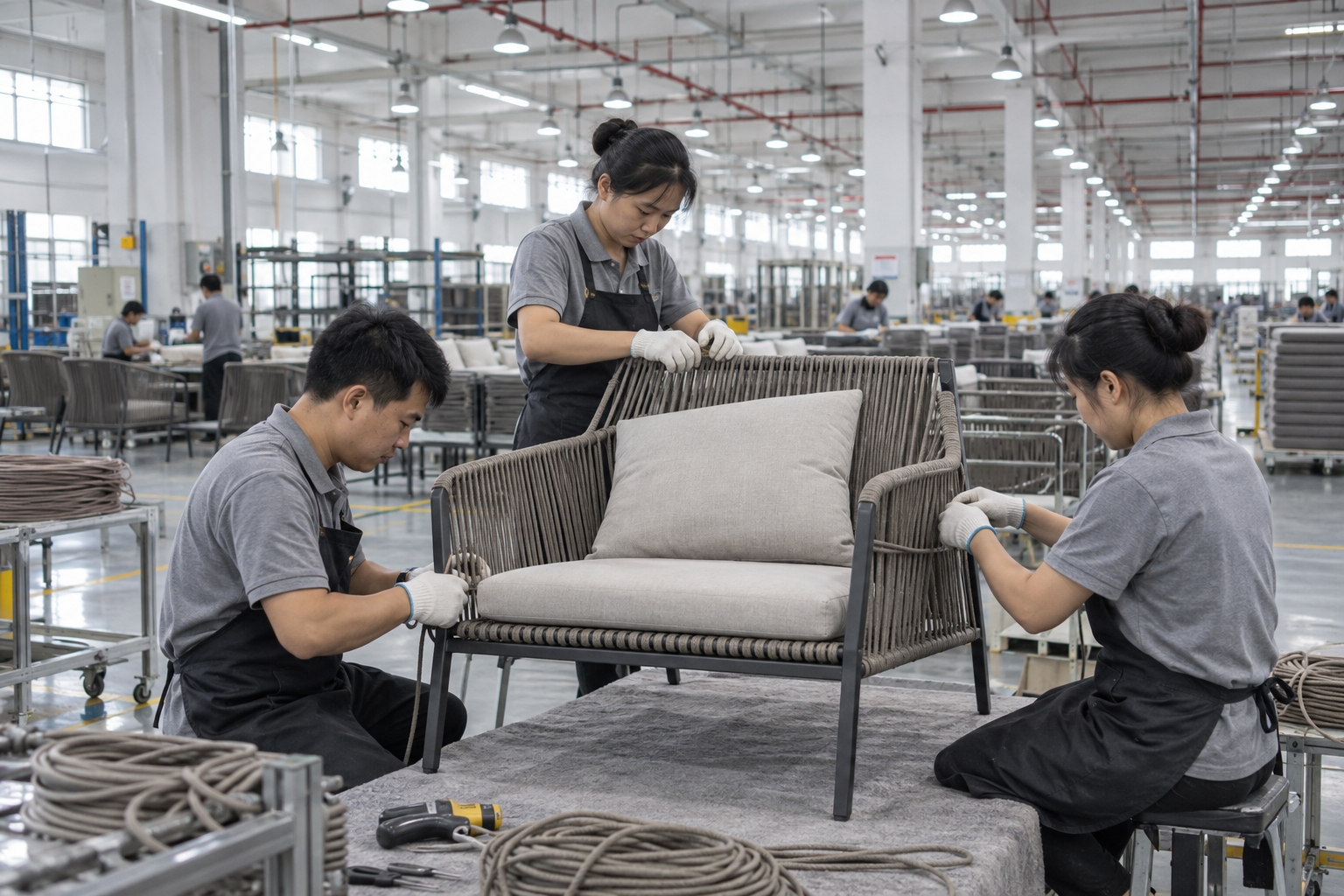
For aluminum furniture, review frame alignment, weld quality and key contact points before the final finish stage. After coating, review coverage, color consistency and points where the product will touch or move. For timber, review machining, joinery and surface condition before final assembly. For rope or woven pieces, review the tension, pattern, terminations and protective contact points as the chair is built.
Upholstery and cushion work need their own checkpoints. Review fabric orientation, seams, piping, closures, foam fit and drainage design against the approved sample. A cushion can look correct on a worktable but behave differently once fitted to the frame, so assembly is an important final part of the in-process review.
Factory testing should resemble genuine product application whenever possible. Move chairs as staff would, operate recline mechanisms, open and close umbrellas, assemble connections and place cushions as a guest would use them. This creates practical observations rather than a generic quality show.
Confirm function, dimensions and assembly
Visible finish is only one part of quality. Product dimensions, stability, moving parts and assembly fit should be checked against the agreed use case.
Use the product drawing or approved sample to identify critical dimensions. Dining tables need appropriate leg clearance and a stable top. Chairs need to sit evenly, stack or align as specified and work with the intended table height. Sun loungers need a clear and stable recline operation. Modular seating needs connectors and cushions that fit the final configuration.
Dimension checks should concentrate on what affects use, layout or installation. An inspection plan does not need to measure every surface of every product in the same way. It should identify the dimensions that affect seating plans, delivery access, replacement compatibility or a customer-approved drawing.
For flat-packed or partially assembled goods, review the hardware count, tool needs and instruction clarity. Installation preparation is often overlooked in a factory setting but becomes critical when a project has a short opening window. A missing connector or unclear carton mark can delay an otherwise complete installation.
Make pre-shipment inspection a delivery check
Pre-shipment inspection should confirm that the finished goods, accessories and packing match the purchase order and approval standard before loading is arranged.
At the finished-goods stage, inspect a representative selection against the buyer’s standard. Review visible finish consistency, clean assembly, product function, dimensions where critical, accessories, labels and cartons. For outdoor furniture, it is also useful to look for rubbing risks between packed components, moisture-sensitive materials and whether cartons protect the surfaces that the customer will see first.
Count and identify the components that will matter at destination: cushions, bases, connectors, hardware packs, protective covers and manuals. Mixed containers are easier to install when carton marks correspond to the product schedule and packing list. Confirm the same information is available to the logistics or project team that will receive the goods.
Shipment inspection is not just a pass-or-fail event. It is the final opportunity to document the delivered condition and release the right goods with a clear handover record. If a corrective action is needed, it is usually faster and less costly to handle it before the container leaves the factory.
Keep corrective actions specific and traceable
A useful quality conversation identifies the product, requirement, observed issue and corrective action without relying on vague language.
When an issue is found, record the product code, location, quantity or sample reference, the agreed requirement and a photograph where useful. Then agree what will happen: repair, replacement, sorting, re-inspection or buyer approval. This gives both sides a practical closeout path and reduces the risk of repeated disagreements.
For recurring programs, save the approved sample references, inspection reports, packing records and any agreed corrective actions with the product schedule. That history is valuable when the same collection is reordered, expanded to another site or repaired after use. It turns experience from one delivery into a clearer requirement for the next.
A supplier’s quality process should make these conversations easier, not replace them. Buyers still need to state the customer requirements that matter to the project, especially when a product is customized or intended for a demanding environment.
A practical buyer checklist
The most reliable quality plan is simple enough to use at every stage and specific enough to guide a real decision.
Before approving production, confirm the sample and material records. During production, review the checkpoints that can still be corrected. Before shipment, compare finished products and packing against the order. If a requirement is important enough to affect acceptance, put it in the record before the goods are made.
For more detail on product selection, read our commercial outdoor furniture buying guide. For material-specific decisions, compare aluminum, teak and rope outdoor furniture before finalizing a sample.
Make remote approvals useful, not superficial
When a buyer cannot be on site, remote review should use clear evidence, stable references and specific questions rather than a stream of unstructured photos.
Remote sourcing is common in international furniture procurement, but a video call alone does not create an approval. Ask the factory to show the product code, sample reference and details that relate to the written standard. Use a consistent camera distance for overall product views and a closer view for welds, weave endings, cushion seams, hardware and carton protection. Record decisions in the sample approval or inspection note after the call.
Photographs are valuable when they are identified and purposeful. For example, a frame-stage photo can confirm the construction before coating, while a finished-product photo can show assembly and visual consistency. A short video can be more useful for a recline mechanism, stacking sequence or umbrella operation. The buyer should state what question each piece of evidence is intended to answer.
Where color is critical, acknowledge the limits of screens and lighting. Use a retained physical swatch, named finish reference or signed sample as the approval authority. Remote media can support the review, but it should not replace a material reference that both the factory and buyer can inspect under different light conditions.
For shipment inspection, request a concise report that links observations to the product schedule. This can include quantities checked, visible standards reviewed, function checks, accessories, packing observations and any agreed corrective action. The report should help a remote buyer make a release decision, not simply prove that a visit occurred.
- Name photos and videos by product code, stage and inspection purpose
- Use a physical sample or swatch as the authority for subjective finishes
- Record remote-call decisions in writing after the review
- Ask the final report to state observations and corrective actions clearly
Frequently asked questions
What is the difference between factory testing and pre-shipment inspection?
Factory testing and in-process checks happen while workmanship can still be corrected. Pre-shipment inspection checks the finished goods, accessories and packing before loading or release.
What should be included in an approved outdoor furniture sample?
Include the product code, dimensions, materials, finish, weave or upholstery, cushion detail, accessories and packing assumptions. Keep physical swatches where color or texture is critical.
Can an inspection report replace a product sample?
No. An inspection report records what was observed; the approved sample and specification define what should be observed.
Check what was agreed
Outdoor furniture quality control is credible when it follows an approved standard through materials, production, assembly and shipment. Create the reference early, make factory testing practical and use shipment inspection as a disciplined delivery handover.
NEED AN INSPECTION PLAN?Send your requirements →RELATED RESOURCES